
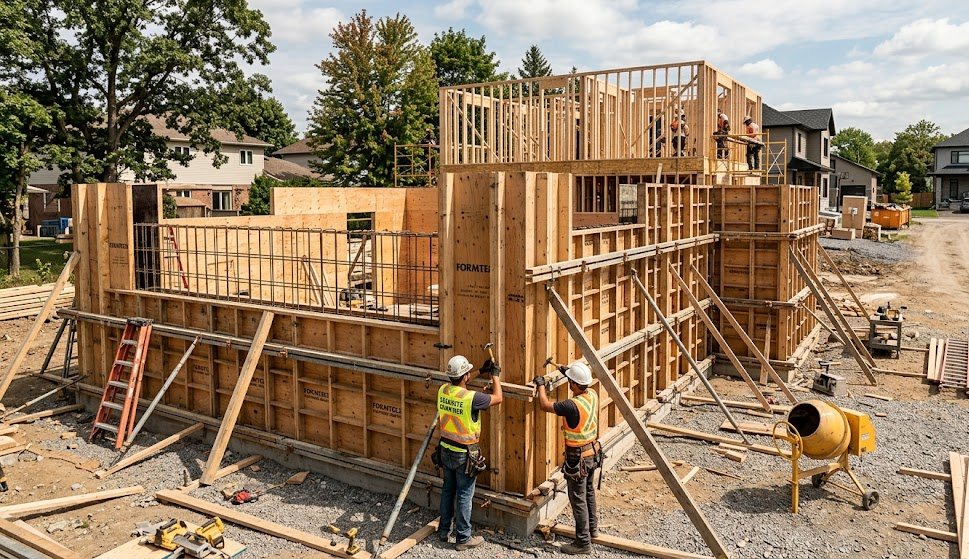
The construction landscape is evolving, driven by an urgent need for efficiency and sustainability in residential buildings. As projects become more complex and timelines tighter, efficient concrete formwork solutions play a pivotal role in shaping the trajectory of modern construction. These innovative systems not only enhance structural integrity but also promise substantial cost savings and reduced labor costs, making them indispensable for builders aiming to meet contemporary demands.
Understanding the Role of Concrete Formwork in Residential Construction
Concrete formwork serves as the essential mold that shapes various structural elements, ensuring they achieve their desired dimensions and finish. In residential construction, formwork is vital for creating strong foundations, walls, beams, and columns, providing both structural support and aesthetic appeal. The efficiency of the formwork system directly impacts construction timelines, budgets, and overall project quality.
Defining Efficient Concrete Formwork
Efficient concrete formwork refers to both the design and the materials used to create these molds, aiming to minimize the time and resources spent on assembling, pouring, and removing concrete forms. Among the materials, timber, plywood, aluminum, and plastic are common, each carrying unique properties suitable for different residential applications.
Exploring Key Features of Residential Formwork Systems
Choosing the right formwork system is key in delivering high-quality residential structures. Several features define a good formwork system, ensuring performance and reliability:
- Durability: A robust formwork system should withstand the weight of wet concrete and environmental conditions without significant deformation.
- Ease of Use: Lightweight materials allow quick assembly and disassembly, essential for maintaining tight construction schedules.
- Cost-Effectiveness: Minimizing waste and maximizing reuse cycles can significantly reduce overall project costs.
- Surface Finish Quality: High-quality formwork ensures smooth, defect-free surfaces, decreasing the need for additional finishing work.
- Reusability: Systems that can be reused many times promote sustainability and long-term economic benefits.
Reviewing Popular Types of Formwork Systems
Different projects demand specific types of formwork systems tailored to their requirements. Here are some widely used forms in residential construction:
Timber Formwork
Timber remains a go-to option, particularly for its flexibility and cost-effectiveness. While it requires skilled labor for precise assembly, it offers a customizable solution for varied designs. However, its limited reusability poses concerns for sustainability.
Plywood Formwork
Plywood, often treated with resin for improved durability, provides a balance between strength and affordability. It supports complex designs while ensuring an even finish. With careful maintenance, it can be reused multiple times.
Aluminum Formwork
Renowned for its lightweight properties and high precision, aluminum formwork is excellent for urban residential projects. Its modular design allows for quick assembly, crucial for speeding up construction timelines.
Steel Formwork
Steel formwork offers unmatched strength and durability, particularly beneficial for heavy-load residential elements. Although it requires machinery for transport, its longevity and reusability make it a worthy investment.
Plastic Formwork
This emerging material is gaining traction due to its lightweight nature and resistance to moisture. It promotes rapid assembly and is fully recyclable, aligning with contemporary sustainability goals.
Strategies for Selecting the Ideal Formwork System
When deciding on the right formwork system, several factors come into play:
- Assess Budget: For one-off projects, timber may be more economical, while aluminum offers long-term savings in larger builds.
- Consider Labor: If skilled workers are scarce, opting for lightweight systems like plastic or aluminum can ease handling.
- Evaluate Project Size: Small residences may benefit from the flexibility of timber, while larger projects might require the durability of steel.
- Factor Environmental Considerations: Choose recyclable systems to reduce waste and comply with green building standards.
- Check Site Conditions: For wet sites, prioritize water-resistant materials to enhance longevity.
Advantages of Using Efficient Formwork Solutions
The benefits of utilizing these modern formwork solutions are multifaceted. Firstly, they significantly cut down the time required for setting up, pouring, and dismantling molds. This translates directly into faster project timelines and reduced labor costs. Moreover, efficient systems enhance the quality of the finished concrete, ensuring minimal additional work is required post-pour. Another major benefit is their environmental impact; many of these modern forms can be reused dozens of times, which mitigates waste and encourages sustainable construction practices.
Future Trends in Formwork for Residential Construction
As the construction industry continues to evolve, trends suggest a growing movement towards prefabrication and automated systems. Building Information Modeling (BIM) and artificial intelligence (AI) are beginning to dominate the sector, paving the way for even more efficient formwork solutions.