Garden lighting does more than make a path visible: it shapes how the landscape feels after sunset. A balanced plan combines gentle pathway illumination with focused beams that reveal trees, walls, and architectural details without overwhelming the garden. From solar path lights to adjustable outdoor spotlights, each fixture has a distinct role. Understanding placement, brightness, and weather resistance helps create a welcoming outdoor space that is both practical and visually coherent.
Garden Lighting Layers for Paths and Features
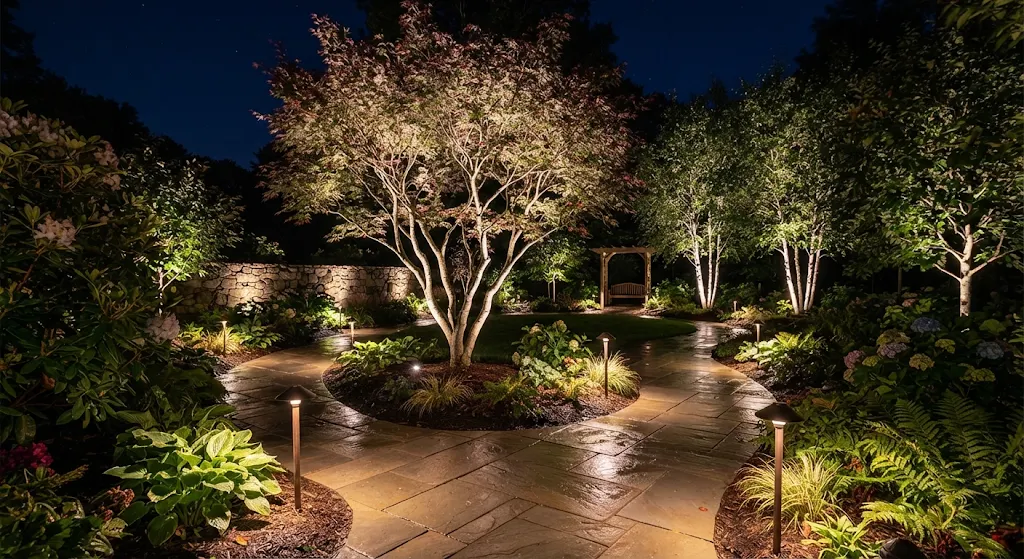
Garden pathway lighting guides movement while adding a soft rhythm to the landscape. Landscape uplighting, by contrast, draws attention upward, turning a tree canopy, textured wall, or sculptural feature into a focal point.
Combining the two creates depth: low-level fixtures make routes legible, while carefully aimed beams provide contrast. For broader ideas on coordinating outdoor spaces, explore garden design inspiration and ways to shape a welcoming landscape.
Pathway Lighting for Safe, Welcoming Routes
Place fixtures to reveal changes in level, turns, and edges rather than lining every step with bright points. Staggered lights usually create a more natural effect and reduce glare; shielded designs also keep the beam directed toward the ground.
Solar path lights suit sunny, accessible locations and avoid wiring, while wired low-voltage fixtures can provide more consistent illumination in shaded areas. Choose weather-resistant landscape lighting fixtures, and keep lights clear of plants as they grow.
Uplighting for Trees and Garden Architecture
Use a narrow beam to emphasize a trunk or column, and a wider spread to wash a wall or canopy. The aim is selective contrast, not uniform brightness: a few illuminated elements allow darker areas to retain their depth.
Tree uplighting presents a practical challenge because the base of a tree may be shaded by its own canopy. A spotlight with a separate solar panel solves this by letting the fixture sit near the trunk while the panel is placed in a sunnier position.
Spotlight Selection for Garden Landscapes
Brightness should match the size and distance of the feature. Manufacturer lumen ratings describe maximum output; the beam becomes less intense over distance, so a powerful fixture is not automatically the best choice for a small shrub.
| Garden Feature | Suggested Output | Lighting Approach |
|---|---|---|
| Small shrub or sign | 100–300 lumens | Close, restrained accent lighting |
| Medium tree or wall section | 300–600 lumens | Moderate beam with adjustable aim |
| Tall tree or house façade | 600–1,000+ lumens | Longer reach and careful glare control |
Before choosing outdoor spotlights, consider beam angle, independent adjustment of the head and panel, and an appropriate weather rating. A narrow beam creates a defined column on a trunk; a broad beam spreads light across a larger surface.
Solar and LED Choices for Reliable Illumination
LED garden lights use energy efficiently and are available in both pathway and spotlight formats. Solar models can work well where panels receive several hours of direct sunlight; in shaded planting beds, a remote panel or wired system may deliver more dependable performance.
Check that fixtures are rated for outdoor exposure, with robust materials and sealed construction. For a cohesive lighting design, coordinate colour temperature and fixture style with the garden’s stone, timber, and planting.
Placement Principles for a Balanced Night Garden
Start by identifying the route people use, then select one or two features to emphasize. This keeps the scheme purposeful and helps prevent glare from competing lights.
A practical plan can follow these steps:
- Mark path edges, steps, and changes in direction before choosing fixture positions.
- Test spotlight angles after dusk, aiming beams away from windows and direct sightlines.
- Place solar panels where they receive sunlight, even if the lights themselves sit in shade.
- Leave room around fixtures for plant growth and routine maintenance.
Subtle accent lighting can connect the route to a seating area or entrance without flooding the entire yard. For complementary ideas, see inspiration for outdoor living areas and approaches to garden illumination.
Combining pathway lights, uplighting, and spotlights can create a welcoming garden while highlighting its most attractive features. The right arrangement improves visibility, adds depth, and enhances the outdoor atmosphere. To choose suitable lighting solutions for your garden, contact an expert who can help you create a balanced and functional landscape design.