
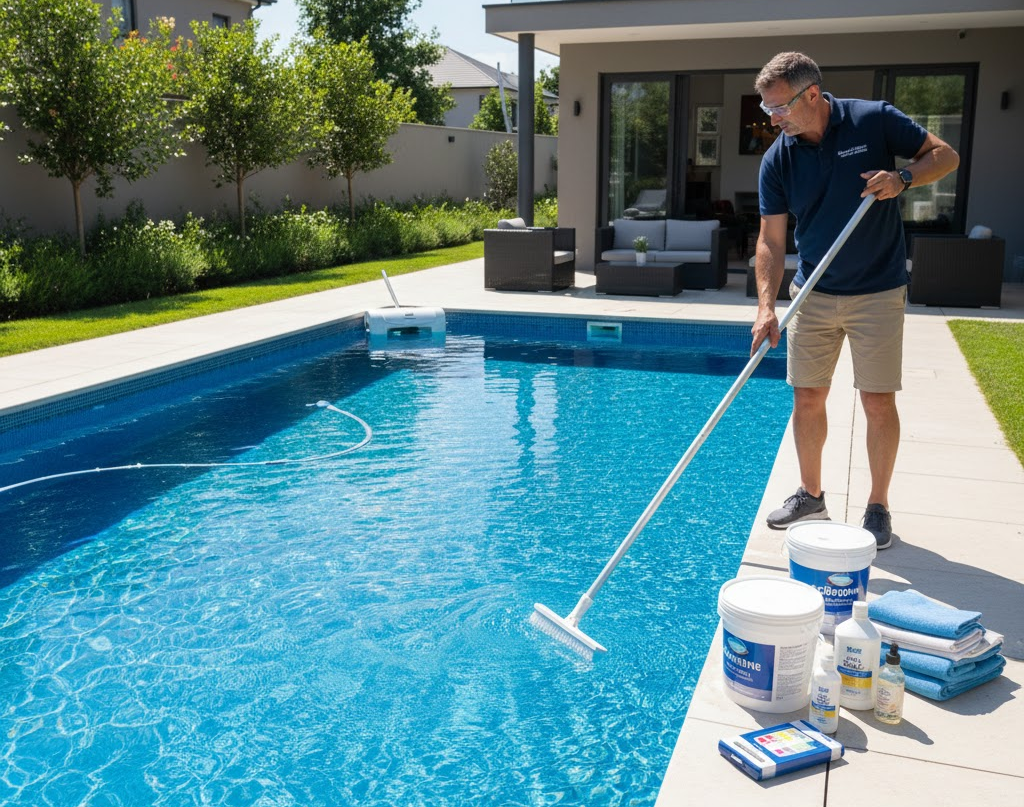
Maintaining the right chemical balance in your pool is essential for keeping the water safe and clean. However, many pool owners fall into common traps that can lead to ineffective maintenance and costly repairs. In this article, we’ll explore the most frequent mistakes made in pool chemical maintenance and how to avoid them for a crystal-clear swimming experience.
Overlooking Regular Testing of Water Chemistry
One of the primary errors pool owners make is neglecting to regularly test the water chemistry. It’s vital to monitor your pool’s pH levels, chlorine concentration, and overall alkalinity. A common misconception is that once the pool is correctly balanced, it remains that way forever. Environmental factors, such as rain and debris, can significantly alter these levels.
Investing in a reliable testing kit is indispensable. Regular testing allows for timely adjustments, preventing more severe issues like algae blooms or cloudy water. To learn more about effective testing methods, check out this resource: The Importance of Regular Water Testing.
Improper Chemical Addition
Order of Chemical Application Matters
When adding chemicals to your pool, the order of application matters immensely. A common blunder is mixing different chemicals together. This can lead to dangerous reactions and not effectively rectify the water issues. Always add chemicals to water, never the other way around.
For example, when you’re using chlorine products, ensure to add them to a bucket of water before introducing them to the pool. This decreases the risk of chemical burns and ensures a smoother dispersion in the pool water.
Neglecting to Follow Manufacturer Instructions
Another common mistake involves disregarding the manufacturer’s instructions on chemical products. Each chemical may have specific dosages tailored to pool size and type. Reading the labels carefully will leave you with clear guidance on how much to use.
Ignoring Environmental Factors
Outdoor pools are exposed to a variety of environmental influences that can throw off chemical levels. Issues like heavy rainfall or intense sunshine may skew pH levels and disinfectant efficacy. Homeowners often overlook these factors. It’s crucial to adjust your pool chemicals accordingly, especially after a storm.
Moreover, debris and organic material, such as leaves, can consume chlorine, leading to imbalances. Regular skimming and vacuuming are essential to maintaining a clean pool and preventing organic waste buildup.
Inadequate Algaecide Use
A frequent mistake is the sporadic or inadequate use of algaecides. While you may be consistent with chlorine, neglecting algaecides can result in alarming algae growth. It’s essential to use them as a preventive measure rather than a remedy.
Employing algaecides during peak seasons can help inhibit growth. Furthermore, not all pools require the same algaecide. Matching the right product to your pool type is essential, and maintaining unbalanced water chemistry can render algaecides ineffective.
Failing to Shock the Pool Regularly
The term “shocking” refers to the process of super-chlorinating the water to eliminate contaminants and restore water clarity. Many pool owners tend to overlook this step during their maintenance routines. A significant error is assuming that standard chlorine levels are sufficient to address all the impurities that may arise.
Regularly shocking your pool, particularly after heavy usage or following a storm, helps maintain water quality. For guidance on how to effectively shock your pool, visit: Essential Tips for Shocking Your Pool.
Not Using a Stabilizer
Using a stabilizer is crucial to protecting chlorine from the sun’s harmful UV rays. Many pool owners neglect this vital step, losing a significant quantity of chlorine to evaporation. A cyanuric acid stabilizer helps to maintain chlorine levels, lowering the frequency of chemical additions. This will not only enhance pool clarity but also prolong the effectiveness of chlorine.
For an in-depth exploration of stabilizer benefits, see: Why You Need a Stabilizer for Your Pool.
Underestimating the Role of Filtration
Lastly, many owners forget that proper filtration is a vital component of water maintenance. Insufficient filtration can lead to various water quality issues, even with perfect chemistry. Ensure your filtration system operates at optimal levels, and clean or replace filters regularly to enhance circulation and purification.
Maintaining your pool’s chemical balance is crucial for ensuring a safe and enjoyable swimming environment. By avoiding these common mistakes and seeking advice from an expert, you can keep your pool in pristine condition all season long.