
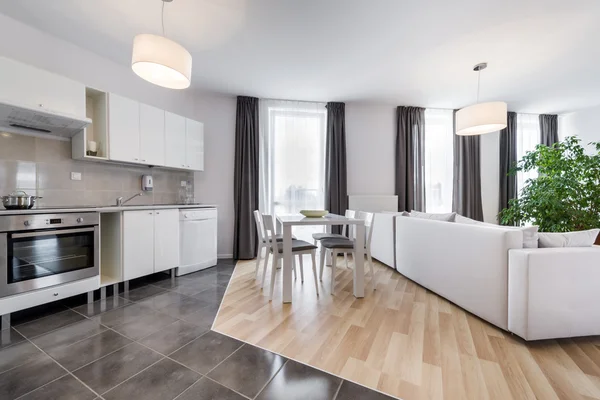
The modern trend of open-plan living has transformed the way we interact with our homes, merging different functional spaces into a cohesive whole. Choosing the right flooring plays a pivotal role in enhancing this integration. From the bustling kitchen to the relaxing lounge, the flooring must seamlessly connect these areas while ensuring durability, comfort, and aesthetic appeal.
Understanding Open-Plan Living Spaces
Open-plan living involves the removal of internal walls to create expansive spaces, combining areas like kitchens, dining rooms, and living areas into one fluid environment. This approach aims for improved light flow and social interaction. The choice of flooring is integral in defining the different zones within this singular space, contributing to both functionality and visual harmony.
Defining Different Zones with Flooring
Creating distinct areas within an open-plan layout is essential for functionality. Effective zoning can be achieved through various flooring types that not only complement one another but also serve specific purposes. For instance, the kitchen area requires flooring that can withstand spills and heavy foot traffic, while the living area benefits from softer, warmer surfaces.
Top Flooring Options for Open-Plan Living
When delving into flooring choices, several materials come to the forefront. Each has its unique advantages, making it essential to select based on personal needs and the specific layout of the space.
Luxury Vinyl Tile (LVT)
LVT has emerged as a front-runner in flooring choices for open-plan living. Its waterproof nature and wide-plank designs make it ideal for kitchen-dining-living setups. LVT closely mimics the look of hardwood or stone, providing both style and durability. Additionally, it’s warm underfoot, a significant advantage during cold months.
Laminate Flooring
Budget-friendly and available in various styles, laminate flooring is another excellent option for high-traffic zones. With advancements in manufacturing, modern laminate can effectively resist moisture and heavy wear. It’s relatively easy to clean and maintain, making it suitable for families.
Sheet Vinyl
Often underrated, sheet vinyl offers seamless coverage, which is essential in open-plan spaces to minimize visual breaks. Its durability and affordability make it a practical solution for areas prone to spills, while modern designs can mimic more expensive materials without sacrificing performance.
Engineered Wood
For those seeking warmth and elegance, engineered wood is a sophisticated choice. Its layered construction provides good stability while retaining the authentic appearance of timber. Engineered wood can be refinished, extending its lifespan and allowing homeowners to adapt their décor over time.
Flooring Compatibility with Underfloor Heating
In contemporary open-plan homes, underfloor heating is increasingly popular, requiring compatible flooring solutions. LVT, stone tiles, and certain engineered woods effectively transmit heat, ensuring comfort throughout. Choosing the right underlay is equally crucial to maintain thermal efficiency while preserving the floor’s integrity.
Moisture and Acoustic Considerations
Given the open nature of these living spaces, attention to moisture and sound absorption is vital. Acoustic underlay can significantly reduce noise levels, enhancing comfort. Furthermore, moisture-resistant materials should be prioritized in kitchen and dining zones to safeguard against spills and humidity.
Designing with Cohesion
The aesthetic appeal of open-plan spaces is heightened when flooring materials are thoughtfully chosen. Using similar tones across different zones promotes a cohesive look while still allowing for distinct functional areas. The continuous flow can be accentuated by the use of rugs, furniture arrangement, and subtle transitions between flooring styles.
Color and Pattern Choices
Selecting the right colors and patterns can transform an open-plan living space. Warmer, natural tones create an inviting atmosphere, while larger patterns or herringbone designs can add visual interest without overwhelming the senses. Aligning flooring aesthetics with furniture and wall colors ties the whole design together.
Common Mistakes to Avoid
Homeowners should be mindful of several pitfalls when selecting flooring for open-plan designs. Avoiding the mixing of too many colors or materials helps maintain a sense of unity. Additionally, never underestimate the importance of proper installation, especially when underfloor heating is involved.
With the right approach and materials, achieving a beautifully coordinated open-plan living space is within reach. For more detailed guidance on choosing flooring that meets all these criteria, consult with professionals who specialize in residential designs.
Explore more about flooring choices.