
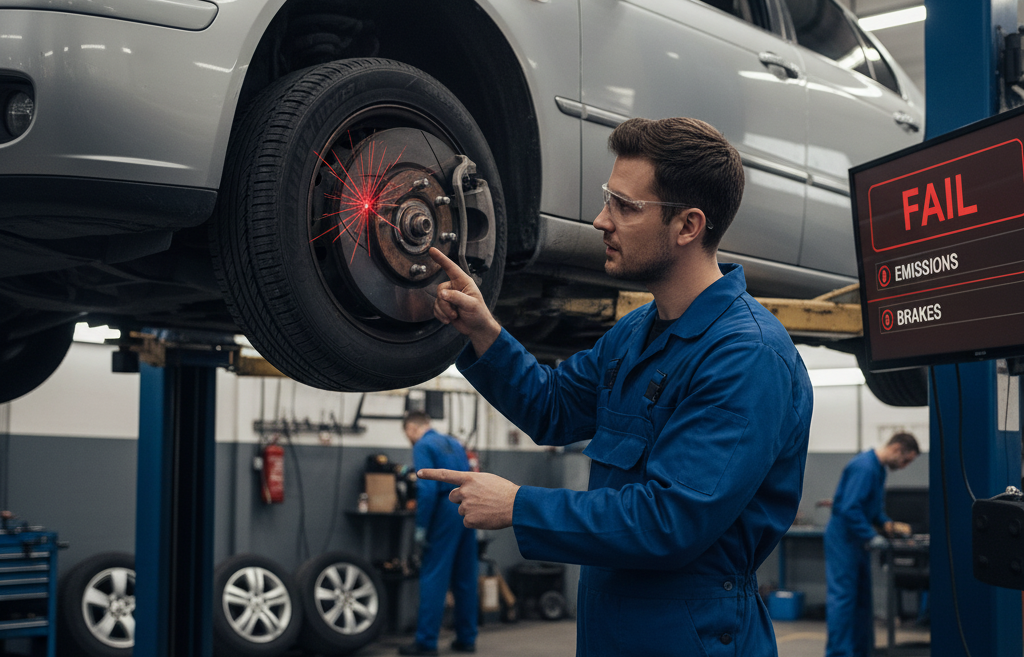
Are you gearing up for your next vehicle inspection? Understanding the common issues that can lead your car to fail can save you time and money. From brake systems to emission controls, let’s explore the factors that inspectors examine to help keep your vehicle safely on the road.
Brake System Failures
The brake system is arguably the most critical component when it comes to vehicle safety. During inspections, mechanics rigorously evaluate the brake pads, rotors, and overall brake function. A prevalent issue is worn brake pads; if they drop below the necessary thickness, they can significantly affect stopping power. Inspectors typically expect a minimum thickness of 1/4 inch for drum brakes and 1/8 inch for disc brakes.
In addition, warped rotors can lead to vibration during braking, reflecting a serious safety concern. Leaking brake fluid or damaged lines can also result in immediate rejection during the inspection, as these issues can plague the braking system’s integrity. Regular brake assessments are essential, as they can pinpoint problems like squeaky noises or a spongy brake pedal before they culminate in inspection failure.
Lighting and Electrical Systems
Lighting issues rank high on the list of reasons for inspection failures. Headlights that are burnt out, malfunctioning taillights, and defective turn signals can lead to automatic rejection. Moreover, broken or damaged light lenses can diminish light output and allow moisture to invade, resulting in further complications.
Another common concern is headlight misalignment, which can compromise not only the driver’s visibility but also the safety of oncoming traffic. Before an inspection, drivers should meticulously check all vehicle lights systematically to ensure every component is in working order. Regularly replacing burnt-out bulbs and addressing defective lenses is a proactive approach that can save time during inspections.
Tire Condition and Inspection Requirements
The condition of tires is vital for safe driving, and inspectors scrutinize them closely. A key metric evaluated is tread depth; tires should possess at least 2/32 inch of tread to provide the necessary traction during adverse weather conditions. Many drivers can easily assess their tire tread by using a simple quarter test. If the tread does not reach above George Washington’s head, it’s time for a replacement.
Additionally, uneven wear patterns can indicate alignment issues, while visible signs of damage, such as bulges or cuts, can lead to immediate failure. Regular maintenance, including tire rotation every 5,000-7,000 miles, ensures tires remain in optimal condition and ready for inspection.
Emissions System Challenges
The emissions system is increasingly scrutinized as environmental regulations tighten. Vehicles that trigger a check engine light due to emissions problems face automatic failure during inspections. Common issues include faulty oxygen sensors that inaccurately gauge exhaust gases and malfunctioning catalytic converters that are unable to appropriately filter pollutants.
Exhaust leaks also pose significant risks, as they can lead not only to noise but also to the escape of harmful gases. Regular attention to warning signs like poor fuel efficiency or rough idling can help diagnose faults early. Scheduling routine maintenance for emissions components can prevent failures when it counts.
Steering and Suspension Issues
The steering and suspension systems are crucial for maintaining control and ensuring a smooth ride. Inspectors look closely at ball joints, tie rods, and shocks or struts. Worn ball joints can compromise steering precision, while faulty shocks lead to excessive body movement, potentially making the vehicle difficult to handle.
Drivers should heed signs such as steering wheel vibrations or uneven tire wear, which may signal underlying problems. Regular assessments can pinpoint these issues before they become detrimental to passing inspections.
Windshield and Wiper Failures
Visibility is paramount during inspections. Inspectors check windshields for cracks or chips that impede the driver’s line of sight. Even minor damage can result in rejection, especially if it grows into a larger issue over time. Windshield wipers must also function correctly; inspectors seek blades that maintain proper contact with the glass and a washer system that disperses fluid effectively.
To prepare for inspections, drivers should assess their windshields, making timely repairs for any chips or cracks. It’s also essential to replace worn wiper blades to ensure they work optimally during inclement weather.
Body and Frame Concerns
Body and frame integrity is another point of concern for inspection facilities. Inspectors examine for rust damage in structural areas, as advanced rust can significantly weaken support systems. Additionally, loose or damaged body components raise red flags, as they pose safety hazards on the road.
To avoid these issues, drivers should routinely inspect and address any signs of rust or loose body parts promptly. Keeping the vehicle clean and protected from salt and debris can also mitigate rust formation.
Being informed about these common inspection pitfalls allows vehicle owners to maintain their cars proactively, ultimately saving time and money while ensuring safe driving conditions on the road.
For the best results, consider consulting with an automotive technician to help keep your vehicle in peak inspection-ready condition.