
🏡 Interior decoration reflects personal taste, lifestyle and the atmosphere people want to create in their homes. Some interiors favour simplicity, open spaces and carefully selected objects, while others embrace bold colours, varied patterns and contrasting influences. Two styles that illustrate these different approaches are minimalist interior decoration and eclectic interior design.
Understanding Minimalist Interior Decoration
✨ Minimalist interior decoration focuses on simplicity, functionality and visual balance. Rather than filling rooms with numerous decorative elements, this approach prioritises essential furniture, clean lines and carefully chosen accessories. Every item has a purpose, whether practical or aesthetic.
Colours and Materials in Minimalist Interiors
Minimalist spaces generally feature neutral colour palettes that create a calm and harmonious atmosphere. White, beige, grey and soft earthy tones are common choices. These shades help interiors feel brighter and more spacious, particularly when combined with natural light.
Materials also contribute to the overall appearance. Wood, stone, glass and metal can introduce subtle textures without making the room feel crowded. Instead of relying on elaborate patterns, minimalist decoration uses material quality and simple finishes to create visual interest.
Furniture and Decorative Elements
Furniture in minimalist interiors is usually characterised by simple shapes, practical functions and uncluttered surfaces. Storage solutions are often integrated into the design to keep everyday objects organised and out of sight.
Typical features include:
-
Clean-lined furniture: Sofas, tables and storage units with straightforward silhouettes.
-
Functional accessories: Decorative objects that also serve a practical purpose.
-
Open spaces: Carefully arranged furniture that allows comfortable movement.
-
Subtle lighting: Pendant lights, floor lamps and natural light that enhance the room without dominating it.
-
Limited decoration: A few carefully selected artworks, plants or accessories.
The objective is not to create an empty home but to maintain a sense of order where each element contributes to the overall atmosphere.
Exploring Eclectic Interior Decoration
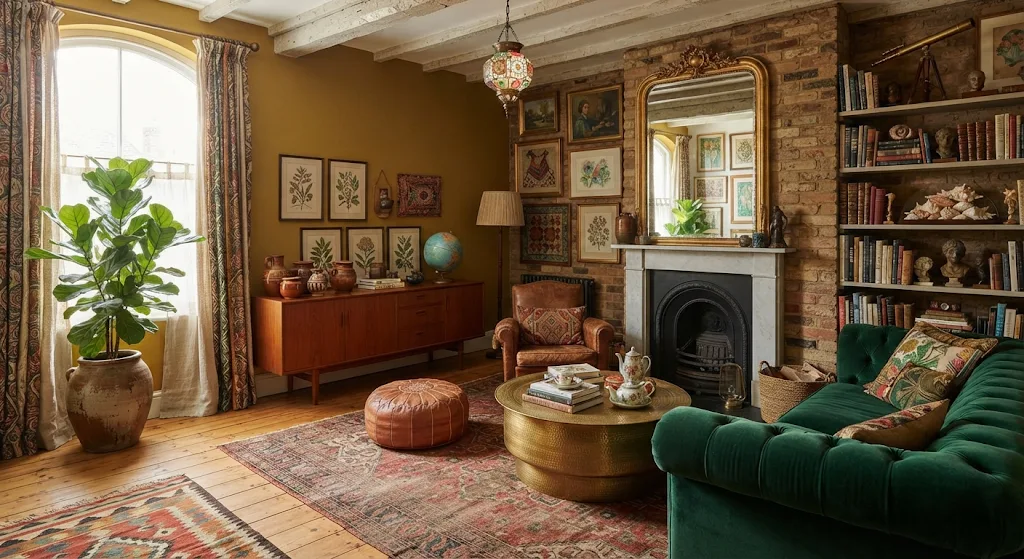
🎨 Eclectic interior decoration takes a more expressive approach. It combines different styles, periods, colours, textures and decorative influences to create a personalised environment. Rather than following one strict design language, it allows several aesthetic references to coexist.
Colours and Patterns in Eclectic Interiors
Unlike minimalist spaces, eclectic rooms often incorporate vibrant colours, contrasting shades and varied patterns. A colourful rug, patterned wallpaper or distinctive artwork can become a focal point.
However, combining different elements does not mean placing everything together without consideration. Successful eclectic interiors maintain visual harmony through recurring colours, complementary textures or carefully balanced proportions.
Common decorative choices include:
-
Bold colour combinations: Contrasting tones that give rooms personality.
-
Mixed patterns: Floral, geometric and abstract designs used together.
-
Varied materials: Wood, velvet, rattan, glass and metal within the same space.
-
Decorative artwork: Paintings, photographs and objects that reflect personal interests.
-
Distinctive accessories: Vintage finds, travel souvenirs and contemporary decorative pieces.
Furniture and Personal Expression
Eclectic furniture arrangements can combine contemporary sofas, vintage cabinets, antique tables and modern lighting. Each piece contributes a different character to the room.
This approach is particularly suitable for people who enjoy collecting objects, mixing influences or displaying meaningful possessions. An eclectic interior can evolve over time as new furniture and accessories are introduced.
The main challenge is maintaining consistency. Repeating certain colours, materials or shapes can help connect different pieces and prevent the room from appearing visually overwhelming.
Minimalist vs Eclectic Interior Styles: Main Differences
Although both approaches can produce attractive interiors, their priorities differ considerably. The following comparison highlights their main characteristics.
| Design Element | Minimalist Style | Eclectic Style |
|---|---|---|
| Colour palette | Neutral and restrained | Varied and expressive |
| Furniture | Simple and functional | Mixed styles and periods |
| Decoration | Limited and carefully selected | Diverse and personalised |
| Patterns | Generally subtle or absent | Frequently combined |
| Materials | Natural and understated | Varied textures and finishes |
| Atmosphere | Calm, open and organised | Creative, warm and distinctive |
Choosing the Right Interior Decoration Style
🛋️ Selecting between minimalist and eclectic decoration depends on lifestyle, personal preferences and the characteristics of the property. The way a room is used should also influence furniture choices, storage arrangements and decorative details.
A minimalist approach may appeal to people who prefer organised surroundings, simple furniture and visually peaceful spaces. It can also work particularly well in compact homes where excessive decoration might make rooms feel smaller.
Eclectic decoration may be more suitable for individuals who enjoy artistic expression, colourful environments and objects with personal significance. It offers greater freedom to combine inherited furniture, contemporary accessories and pieces collected over time.
Before choosing a direction, consider the following points:
-
Daily habits: Determine whether you prefer clear surfaces or enjoy displaying collections and decorative objects.
-
Available space: Consider how furniture arrangements and accessories affect circulation.
-
Maintenance: Think about the time required to organise and care for decorative elements.
-
Personal taste: Identify the colours, materials and furniture styles that naturally appeal to you.
-
Long-term flexibility: Decide whether you prefer a consistent aesthetic or an interior that can evolve.
Creating a Home That Reflects Your Personality
🌿 Minimalist and eclectic interior decoration offer two distinct ways to shape a living environment. The first emphasises simplicity, functionality and visual balance, while the second celebrates diversity, creativity and personal expression.
Neither style is universally better. The most successful interior is one that reflects the occupants’ preferences while providing comfort and practicality. Homeowners can also combine selected elements from both approaches with the guidance of an interior design expert to create a balanced space that feels organised without losing its individuality.