
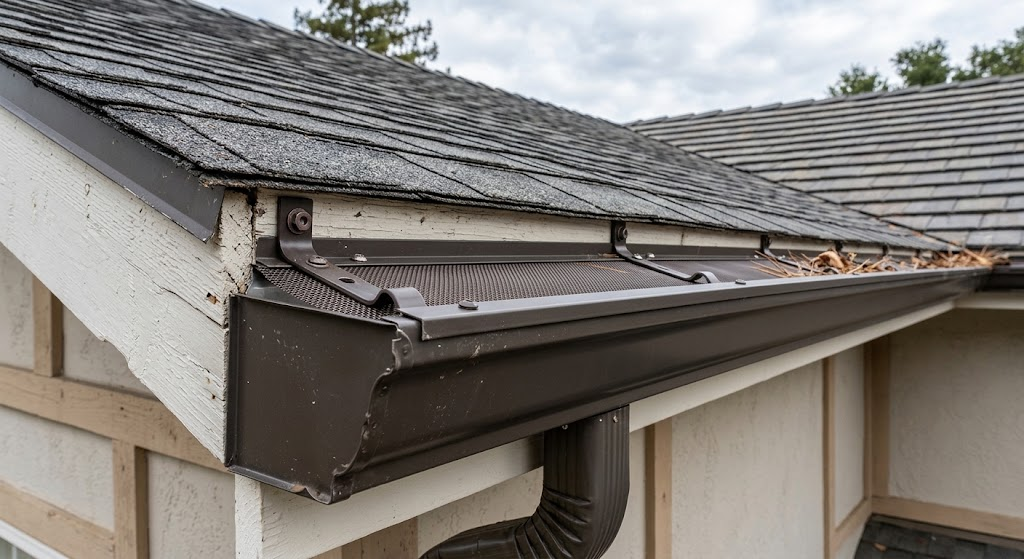
Gutter guards can reduce debris buildup, but they work best as part of a properly fitted drainage system. During installation, the right gutter hangers, outlets, sealants, and downspout accessories can help prevent sagging, leaks, and water pooling near the foundation. Choosing parts by roof conditions and gutter measurements—not by appearance alone—makes for a more reliable result.
Prioritize Accessories by the Problem They Solve
Start by identifying the trouble spot, then select only the parts needed to address it. A sagging run calls for suitable gutter hangers and sound mounting points; water spilling from a corner may point to a leaking seam, a poor slope, or an undersized outlet rather than a need for guards.
For most installations, check support first, water entry into the downspout second, and discharge at ground level third. This order helps address the causes of overflow and water near the house before adding debris-control products.
Inspect Support, Seams, and Outlets
Hangers hold the gutter run against the fascia or roof edge, while downspout brackets and straps secure the pipe to the wall. Screws and rivets fasten these components, but they cannot compensate for rotten fascia or a poorly supported section. Check the mounting surface before installing replacement hardware.
At corners and open ends, confirm that miters, end caps, and joiners match the gutter’s shape and size. Apply compatible gutter sealant where the system requires it, and repair movement or weak support before resealing a joint. Sealant alone is rarely a lasting fix for a shifting connection.
Match Guards and Fittings to the Gutter System
Gutter profile and size determine whether accessories fit. K-style, half-round, box, fascia, and round gutters have different edges and shapes, so a part made for one profile may not seat properly on another—even when the stated width appears similar.
Before buying, verify the gutter profile, labeled size, material, mounting type, outlet opening, and downspout shape. Most hangers, end caps, miters, outlets, connectors, and gutter guards require a close match. For more context on choosing compatible exterior materials, see this home maintenance resource.
| Installation Need | Accessory to Check | Fit Detail |
|---|---|---|
| Sagging gutter run | Hanger and fastener | Match gutter profile, size, and mounting surface |
| Leaking end or corner | End cap or miter | Confirm profile, size, and corner direction |
| Blocked debris entry | Gutter guards, gutter screens, or leaf filters | Check roof edge, gutter lip, and expected water flow |
| Water too close to the house | Downspout extensions or splash blocks | Match the outlet path and ground conditions |
Choose Guards for Debris and Rainfall
Micro-mesh can screen out fine debris such as pine needles and roof grit, while wider screens are suited to larger leaves but may let smaller material through. Brush and foam inserts have different maintenance needs and can collect debris within the gutter. No guard type removes the need for periodic inspection.
Consider roof pitch, nearby trees, rainfall intensity, and winter conditions. In areas with freeze-thaw cycles, a guard that restricts water entry can contribute to overflow and ice buildup. Check that drip edge flashing directs runoff into the gutter and that a guard does not obstruct that path.
Route Discharge Away From the Foundation
Elbows and offsets guide downspouts around trim or other obstacles. Rectangular elbows may have different bend orientations, so check the direction before installation. If the downspout empties into buried drainage, use an adapter made for both the downspout and the drain pipe.
Use downspout extensions when water exits too near the house, and splash blocks where runoff erodes soil or splashes against siding. Rain chains can provide an alternative visible route from a compatible outlet, but the landing area must still carry water away from the foundation. A diverter is more appropriate when concentrated roof runoff overshoots the gutter at a valley.
Prepare for Installation and Upkeep
Clean the gutters before fitting guards, then test water flow through the outlet and downspout. Use gutter cleaning tools suited to the gutter and roof access, and inspect guards after storms and heavy leaf fall. If roof access is unsafe, leave elevated work to a qualified professional.
Material compatibility matters: choose fasteners and sealants suited to aluminum, steel, copper, or vinyl, since mismatched products can corrode, loosen, or damage the gutter. A professional can verify measurements, diagnose persistent overflow, and recommend a compatible installation for complex rooflines.