
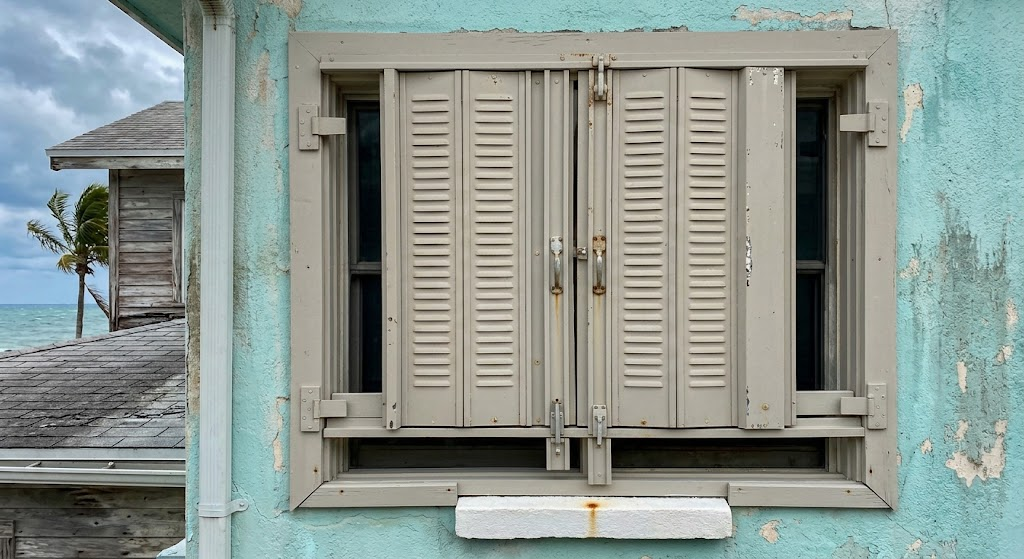
Corrosion and wear on hurricane shutter systems often develop quietly, long before a panel refuses to close. In coastal areas, salt air, humidity, blowing sand, and intense sun can affect metal components, moving parts, and protective finishes, making routine inspection an important part of storm preparation. Recognizing early warning signs—such as rust, pitting, damaged tracks, or loose fasteners—gives homeowners time to arrange repairs before severe weather approaches.
Corrosion Signs on Hurricane Shutter Systems
Coastal exposure can gradually weaken shutters even when they appear intact from a distance. Salt deposits and persistent moisture encourage corrosion on fasteners, hinges, and other metal parts; sunlight and heat can also degrade finishes and seals.
Surface Corrosion and Finish Damage
Look for reddish rust on steel hardware, chalky residue, or small cavities in aluminum known as pitting. Flaking paint or a damaged coating can expose underlying metal to moisture, allowing deterioration to spread beyond the visible blemish.
Not every mark means a shutter must be replaced, but recurring corrosion or deep pitting deserves professional assessment. Cleaning deposits promptly and repairing suitable protective finishes can help limit further damage.
Mechanical Wear and Structural Changes
Moving shutters experience friction each time they are opened or secured. Worn hinges, metal fatigue, deformed slats, cracked end caps, or panels that no longer stack or seat correctly can interfere with operation and leave openings less secure.
Pay attention to changes rather than judging a system by appearance alone. A component that flexes, scrapes, or fails to align may need adjustment or replacement before the next storm-season test.
Operational Wear That Signals Service Needs
Damage is not always visible on the shutter surface. Tracks, latches, anchors, and motors can develop problems that make deployment slow or unreliable, so each opening should be checked individually.
Track, Hinge, and Latch Problems
Accordion shutters should glide and latch without force, while roll-down systems should travel smoothly by crank or motor. Dragging, grinding, or sticking may point to sand or debris in damaged tracks, corrosion, or worn rollers and hinges.
A lock or center latch that no longer catches can leave a closed shutter unsecured. Avoid forcing a resistant system: excess pressure can worsen misalignment, while unsuitable lubricants may trap grit in the mechanism.
Loose Fasteners and Motor Trouble
Check mounting points for missing, loose, or corroded fasteners. Anchors transfer wind loads from the shutter to the building, so any movement around a mounting track warrants prompt professional attention rather than improvised tightening.
For motorized shutters, hesitation, unusual noise, or stalling can indicate a developing fault. Test the system under calm conditions and consult a qualified technician if the motor does not run consistently.
A practical inspection should cover the complete opening, not just the part that is easiest to reach. The following checks can help identify changes early:
- Open, close, and latch each shutter without forcing it.
- Inspect tracks, rollers, hinges, slats, and end caps for debris or damage.
- Look for rust, pitting, flaking paint, and signs of metal fatigue.
- Confirm that fasteners and anchors are present and appear secure.
Inspection Priorities Before Hurricane Season
Southwest Florida’s salt-laden air, humidity, blowing sand, and strong UV exposure can accelerate deterioration over time. A shutter that operated smoothly when installed may develop friction, loose hardware, or brittle seals after repeated seasons outdoors.
Condition Checks by Component
A yearly pre-season review allows problems to be addressed before storm forecasts tighten service schedules and parts availability. Documenting inspections and repairs also helps maintain clear records of the home’s storm-protection systems; owners should confirm documentation needs with relevant professionals and insurers.
| Component | Warning Sign | Recommended Response |
|---|---|---|
| Tracks and rollers | Dragging, grit, or visible damage | Clean carefully and arrange service if movement remains rough. |
| Hinges and latches | Corrosion, wear, or failure to engage | Have affected hardware inspected and repaired. |
| Mounting points | Loose, missing, or corroded fasteners | Ask a qualified professional to assess the anchoring. |
| Panels and slats | Bends, cracks, or poor alignment | Check whether the system still closes and secures correctly. |
Maintenance Decisions and Professional Service
Light cleaning and appropriate lubrication may help maintain operation, but the correct method depends on the shutter type and manufacturer’s guidance. Persistent sticking, significant corrosion, damaged tracks, or structural changes call for a qualified inspection rather than repeated attempts to operate the system.
Testing every opening well before a storm gives time to identify repair needs, document the system’s condition, and schedule specialized service without last-minute pressure. For guidance tailored to a particular shutter system or coastal property, consult a qualified hurricane-shutter professional.