
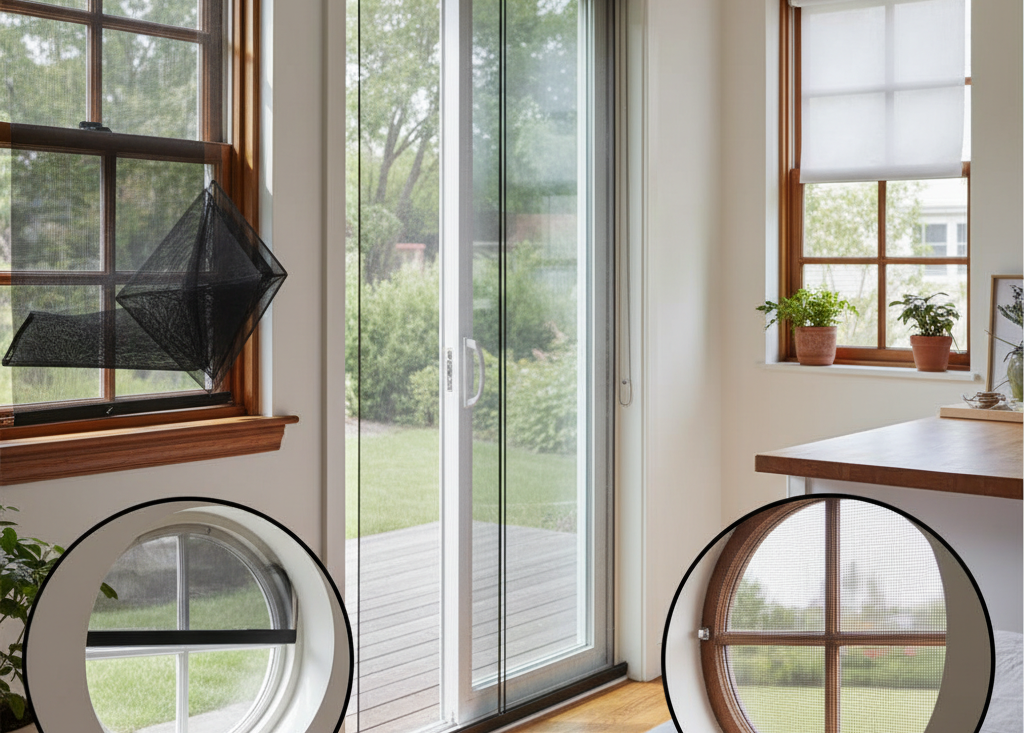
Transforming your living space with the perfect screen can make all the difference in enjoying the outdoors while keeping pesky insects at bay. From refreshing breezes through your screen windows to secure and stylish screen doors, understanding your options is key. This guide explores how to choose the right mesh and frame combinations tailored to every kind of opening, ensuring durability, comfort, and aesthetic harmony in your home.
Selecting the Ideal Screens for Various Openings
When it comes to screens, the mesh and frame are the defining components that determine the function and lifespan of your screen installation. Choosing the right screen for openings, whether for screen doors, windows, or porch enclosures, involves a thorough understanding of materials and their performance under different conditions.
Analyzing Mesh Materials for Longevity and Comfort
Mesh types vary significantly, each boasting distinct benefits suited to specific environments and uses. Fiberglass mesh is highly popular for its affordability and resistance to rust, providing excellent airflow and unobstructed visibility, making it a staple for standard screen windows. However, for homes with energetic pets or in high-wind areas, fiberglass may fall short due to its vulnerability to tears.
Choosing Frame Types to Complement Screen Mesh
The frame is the skeleton that supports the mesh, and its material affects installation, durability, and appearance. Aluminum frames are favored for their strength and resistance to weather, aligning perfectly with both fiberglass and aluminum meshes. Wood frames offer a more traditional aesthetic but need maintenance to prevent weathering and warping. Vinyl frames provide a low-maintenance option, blending durability with style in various finishes.
Optimizing Screen Installation for Different Openings
Proper installation is critical to maximize the function and lifespan of insect screens. Whether filling window openings, fitting screen doors, or enclosing porches, detailed attention to mesh tension, spline fit, and frame alignment ensures both performance and durability. Neglecting these can lead to sagging, loose fit, or early mesh failure.
Addressing Common Installation Challenges
Installing screens requires balancing tension to prevent sagging while avoiding excessive tightness that could tear the mesh. Using high-quality spline and ensuring frame square-ness are crucial steps. For larger openings or high-traffic screen doors, reinforced frames and stronger mesh materials must be considered to withstand frequent use and environmental stress.
Homeowners often underestimate the value of professional installation. Experts bring the necessary tools and experience to guarantee that the mesh and frame fit perfectly, preventing costly repairs down the line.
Matching Screen Types to Your Home Environment
Adapting screen materials and frame choices to regional climates plays a vital role in ensuring their longevity and performance. Hot and sunny regions benefit from solar screen mesh, which blocks up to 90% of UV rays, reduces heat buildup, and enhances privacy. Coastal homes usually require corrosion-resistant meshes like fiberglass or stainless steel to combat salt exposure effectively.
In areas prone to heavy rainfall and humidity, privacy mesh types offer additional protection against debris and water intrusion, often installed on lower porch panels. Windy environments call for tougher frames paired with aluminum or pet-resistant mesh for increased resilience. The diversity of needs highlights the necessity of informed selection to avoid premature screen replacement.
Considering Lifestyle Factors in Screen Selection
Beyond climate, lifestyle factors such as the presence of pets, need for privacy, and usage frequency influence screen choice. For example, families with dogs or cats typically benefit from pet-resistant meshes to avoid regular repairs. Conversely, homeowners prioritizing clear visibility might opt for standard fiberglass mesh in less demanding environments.
Privacy screens suit those seeking a secluded outdoor space without sacrificing ventilation or insect protection. These meshes provide daytime visual barriers while letting in light and air, enriching the comfort of outdoor living areas near busy streets or close neighbors.
Exploring Screen Systems for Enhanced Functionality
Screen solutions extend beyond basic mesh and frame combinations to include various system types catering to different opening needs. Fixed screens offer permanent insect and debris protection for patios and porches. Retractable screens add flexibility, allowing homeowners to enjoy wide-open views when desired, then quickly deploy screens as a shield.
Evaluating Screen Systems Based on Usage and Access Needs
Consider how frequently you will access an opening covered by screens. Fixed screens serve well for seasonal or continuous use without frequent adjustments, while retractable systems meet needs for flexible space management. For openings demanding frequent passage, screens with easy operation like zipperless roll-up styles may prove advantageous.
The right screen does more than keep insects out — it improves airflow, enhances privacy, and adds a polished finish to every window and door. A professional installation ensures a perfect fit, durable materials, and results that look and function beautifully for years to come.