
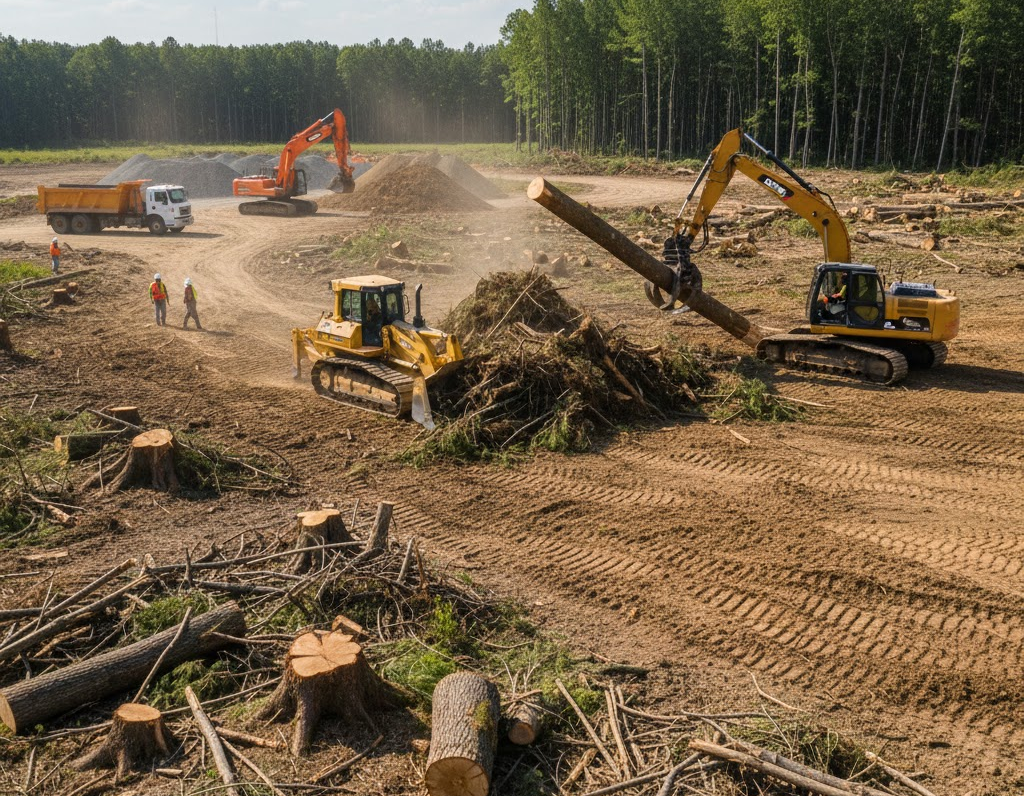
Are you ready to transform your land into a functional space? In this article, we will explore essential lot clearing methods, from brush removal for quick clean-ups to grading that prepares your site for construction. Discover how the right approach can turn an overgrown property into a clean canvas for your next project!
Understanding Lot Clearing
When embarking on a construction or landscaping project, lot clearing stands as a vital initial step. This process is essential for preparing land, whether for building new structures, enhancing agricultural fields, or creating beautiful landscapes. But what does lot clearing entail? It’s not merely about removing a few stray branches; it’s often a comprehensive approach that addresses various aspects of land preparation.
Key Techniques in Lot Clearing
The methods employed in lot clearing can vary based on the specific needs and conditions of the land. Among the most prominent techniques are brush removal, forestry mulching, and grading. Each approach offers distinct advantages, addressing different challenges that landowners may face.
Brush Removal: A Surface-Level Solution
Brush removal focuses primarily on clearing out smaller vegetation such as weeds, shrubs, and undergrowth. This technique is particularly useful for quick clean-ups, enhancing the aesthetic appeal of a property without delving into the complexities of heavy machinery.
This method typically involves using equipment like chippers and trimmers, which allow for a light touch while rapidly clearing out unwanted plants. It creates a cleaner workspace, fostering better visibility and safety around properties. Additionally, by removing dense brush, homeowners can effectively minimize hiding spots for pests, thus enhancing overall safety.
Forestry Mulching: An Eco-Friendly Approach
As environmental concerns take center stage, forestry mulching has gained traction as an efficient alternative to traditional clearing methods. This technique uses specialized machinery to shred trees, shrubs, and underbrush, turning them into mulch that is conveniently spread across the land. This on-site recycling method offers multiple benefits.
One of the standout advantages of forestry mulching is that it eliminates the need for debris hauling, concurrently enriching the soil as the mulch decomposes. This not only enhances soil quality but also dramatically reduces the chances of soil erosion, making it an eco-friendly option. Furthermore, the method can effectively manage invasive plant species and establish natural firebreaks.
Grading: Shaping Your Land for Success
Once the land is cleared, grading becomes crucial for defining the terrain’s shape and slope. This procedure involves leveling or reshaping the soil to create a stable and even surface. Such preparation is indispensable for construction projects, as uneven ground can complicate the installation of foundations, driveways, and drainage systems.
Using heavy equipment like bulldozers and excavators, grading aims to ensure proper water flow away from structures, thereby mitigating flooding and erosion risks. Whether preparing the site for new buildings or creating a backyard oasis, grading paves the way for functional and aesthetically pleasing landscapes.
The Importance of Site Preparation
Beyond just clearing and grading, site preparation is the final touch needed before construction can begin. This often includes comprehensive soil testing, as well as trenching for utilities. A well-prepared site serves as a clean slate for builders, ensuring that all subsequent work unfolds smoothly and efficiently.
Without thorough site preparation, property owners may face severe issues later on, such as structural failures or drainage problems. Careful planning during this stage can save both time and money, emphasizing the critical nature of this stage in the lot clearing process.
Comparing Lot Clearing and Brush Removal
Understanding the differences between lot clearing and brush removal is essential for determining the best approach for your needs. While brush removal targets light vegetation, lot clearing encompasses the removal of trees, stumps, and heavier debris. Lot clearing often includes grading and shaping the land, making it a more intensive process.
For homeowners looking to build, expanded land for driveways, or substantial landscaping, full lot clearing becomes imperative. On the other hand, if you are simply seeking to tidy up your yard or create a fire break, brush removal is a quick and efficient answer.
Factors to Consider Before Choosing a Method
Before diving into a clearing project, it’s crucial to assess various factors. Evaluate the size of your property, the extent of growth, and your intended use. If your goal is substantial land development, opting for full lot clearing with grading is recommended.
However, for those only requiring minor cleanup, brush removal might suffice. Discussing your objectives with a professional contractor can provide clarity and guide you toward the most effective approach.
Understanding the various lot clearing methods available can significantly impact the success of your land development project. Whether you opt for brush removal for a quick clean-up or grading for formal construction preparations, consulting with an expert in land clearing will ensure that you choose the best approach for your specific needs.